
What this comparison covers
- Ad network vs DSP vs ad server: which one you need
- The 14 platforms, ordered by entry cost
- Why the deposit tells you almost nothing
- What a self-serve DSP adds, and what it charges
- How the bid works when the format is native
- White label RTB platforms: build, rent or buy a seat
- In-app native and native search placements
- Six things to verify before you fund anything
- What the Privacy Sandbox shutdown actually changed
- Disclosure rules that land on your creative
- Questions buyers ask before signing up
- How this comparison was researched
Ad network vs DSP vs ad server: which one you need
Buy from a native ad network if you want traffic running tomorrow on one vertical; buy through a DSP if you need one bid strategy across native, display, video and CTV; touch an ad server only if you are the party serving and counting the ads.
The three get conflated because the categories overlap in practice, so here is the line between them. A native ad network contracts publishers itself, resells that inventory at a price it sets, and keeps the difference without telling you what it was. A demand-side platform owns no inventory: it receives bid requests from supply-side platforms and exchanges, decides what each impression is worth to you, and bills a disclosed percentage on top of what it clears. An ad server neither buys nor sells. It stores creatives, decides which variant renders in a won slot, applies frequency caps, and produces the impression and click counts that both sides bill against.
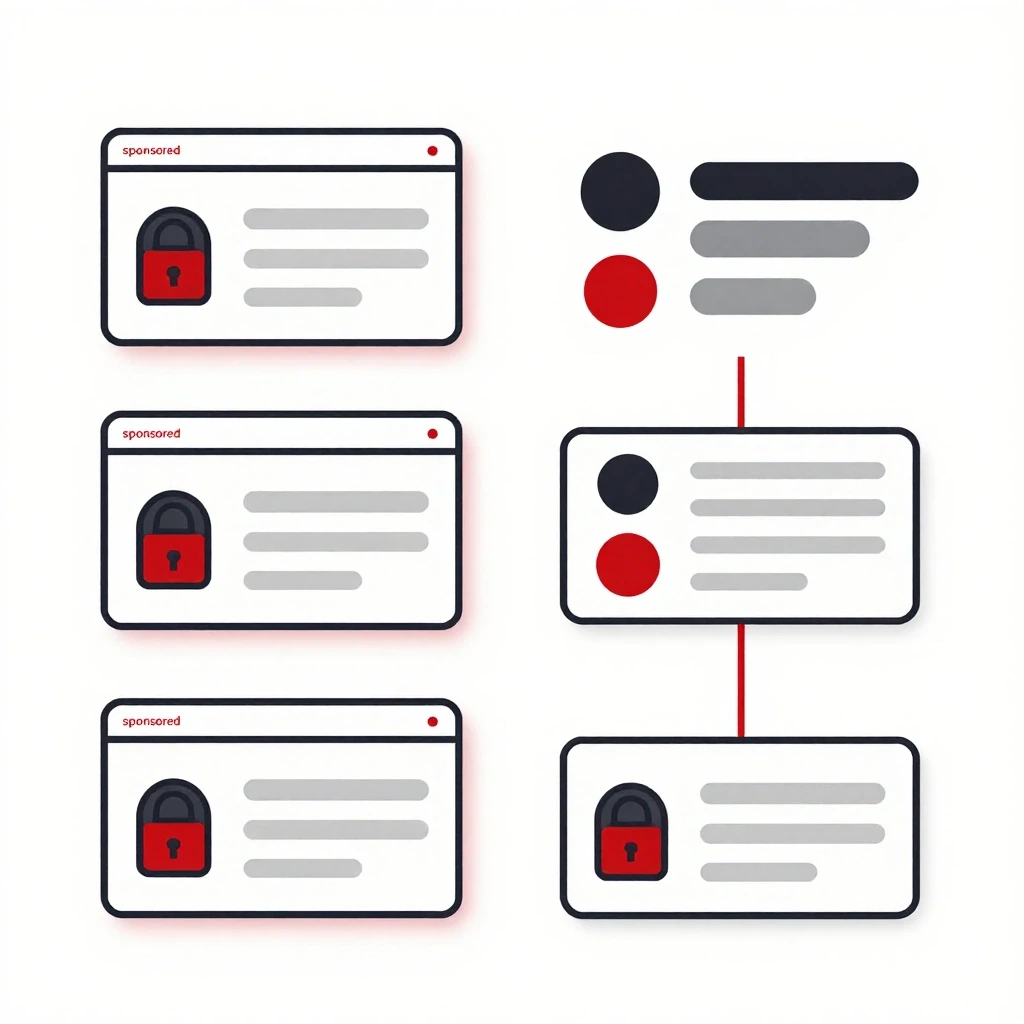
Where advertisers get stuck is the ad server versus DSP question, and the honest answer is that most buyers do not need a separate one. Every DSP ships a creative store, rotation logic and its own counting, so a buyer running purely programmatic through a single seat already has ad serving inside the DSP. A third-party ad server earns its keep when you run across several DSPs and several direct deals and need one set of numbers that nobody in the chain is incentivised to flatter. Publishers are the opposite case: they cannot function without one, which is what Google Ad Manager and Kevel are, and neither is a DSP.
| Layer | Owns inventory | Decides | Charges you | Examples |
|---|---|---|---|---|
| Native ad network | Contracts it directly | What to sell you and at what price | Undisclosed margin inside the CPC | AdsCompass, MGID, Taboola, Revcontent |
| DSP | No | What each impression is worth in a live auction | Disclosed percentage of media spend | The Trade Desk, DV360, Amazon DSP, StackAdapt |
| Ad server | No | Which creative renders, and what counts as delivered | CPM on impressions served | Google Ad Manager, Kevel, Epom Ad Server |
One wrinkle worth knowing before you compare vendor pages: several networks now run all three layers in house. AdsCompass, for instance, operates its own exchange, SSP and DSP and exposes OpenRTB, XML and JSON endpoints in both directions vendor claim, which means the same company is your supply, your bidder and your counting. That is convenient and cheap, and it also removes the independent referee. Decide which of those two facts matters more for your vertical.
The 14 platforms, ordered by entry cost
Entry runs from a $50 deposit at AdsCompass and Revcontent to a $50,000 monthly commitment on Amazon's managed DSP, and the ordering below reflects cost of entry combined with how much you can verify before paying, not traffic quality.
Read these as activation floors. None of them is a budget, none of them predicts performance in your vertical, and no network in this market publishes an audited rate card. Where two sources disagree, the disagreement is stated rather than averaged away.
| Native ads network | Entry | Models | Visible before you pay | Worth knowing |
|---|---|---|---|---|
| AdsCompass | $50 deposit checked 22 Aug 2026 | CPC, CPM | Traffic Calculator returns volume and average bid per geo and format after a free registration, no deposit | Bidding at individual source level, not just blocking. Own exchange and SSP. Eight formats including native, in-page and video pre-roll |
| Revcontent | $50 deposit reported | CPC | Nothing until funded | Smaller auction than the leaders. Publisher side gated near 50,000 monthly visits |
| MGID | $100 deposit reported | CPC, CPM | Nothing until funded | Usual first stop for affiliate budgets in the EU, LATAM and Southeast Asia |
| Teads (formerly Outbrain) | ~$20 minimum spend reported | CPC, CPM | Nothing until funded | Onboarding leans managed since the merger. Outbrain closed the $900m Teads acquisition on 3 February 2025 and took the Teads name in June 2025 |
| Taboola | No published minimum checked 22 Aug 2026 | CPC | Nothing until funded | Deepest auction of the group. Buyers commonly cite ~$50/day for signal and ~$300/day to clear the learning phase |
| Microsoft Audience Network | No minimum, daily budget account checked 22 Aug 2026 | CPC | Audience Network Planner sizes audiences before spend | Only native inventory that can be targeted by LinkedIn company, industry, job function and seniority |
| Platform | Realistic entry | Fee | Self-serve | Worth knowing |
|---|---|---|---|---|
| SmartyAds DSP | ~$1,000 deposit, ~$100/day floor reported | Percentage of spend | Yes | Lowest realistic RTB entry on this list. White-label side was spun out to the Teqblaze brand in 2026 |
| Epom DSP | Licence, quoted per account vendor claim | Licence plus margin you set | Yes, and rebrandable | Connects to 50 to 80 SSPs out of the box depending on which of its own pages you read. Genuine white-label tier |
| BidsCube | Licence, quoted per account vendor claim | Licence or revenue share | Yes, and rebrandable | Claims a branded platform live in about two days. Bidstream data access is the selling point |
| StackAdapt | No published minimum; ~$5,000/mo in practice reported | Percentage of spend | Yes | Native sits alongside display, CTV and audio in one seat. Fastest onboarding of the mid-market group |
| Amazon DSP, self-serve | No Amazon-imposed minimum since November 2025; $10,000–$15,000/mo practical checked 22 Aug 2026 | Technology fee, no management fee | Yes | Retail and streaming signal no other DSP has. Amazon's own pages contradict each other on minimums, so read the specific product page for your format |
| Amazon DSP, managed | $50,000/mo, varies by country Amazon product page | Media plus service | No | Amazon Ads staff operate the campaigns |
| Display & Video 360 | ~$50,000/mo practical, contract required reported | ~10–15% open auction, ~4% YouTube and guaranteed | No, needs a Google Marketing Platform agreement | Only route to YouTube inventory programmatically. Ties into GA4 and Campaign Manager 360 |
| The Trade Desk | $100,000+ per quarter commonly cited reported | Take rate around 20%, derived from public filings | No | Largest independent seat and the CTV default. Agencies reported more flexibility on fees from late 2025 |
Network minimums from platform documentation and dated trade sources; DSP figures from Amazon Ads product pages and from agency and vendor reporting published between March and August 2026. Reach, GEO and publisher counts anywhere on this page are vendor claims and are marked as such. Nothing here is audited.
A contradiction worth knowing before you deposit
AdsCompass is listed at a flat $50 minimum across payment methods on most directories, but at least one industry profile records $50 for cards, $100 for Bitcoin and $500 for wire. The network's own advertiser documentation says $50. If you intend to fund with crypto or a bank transfer, confirm the figure in the deposit screen before you plan around it — this is the single most common place where a published minimum and a real one diverge, and it is not specific to this network.
Why the deposit tells you almost nothing
The deposit is the turnstile, the CPC is the meter, and the test budget is the actual bill — and only the third one decides whether you can afford the channel.
A $50 activation and a $100 activation both disappear inside two days of honest testing. What separates a cheap platform from an expensive one is how long it takes to reach a decision you can trust, and that is a function of conversion volume, not of the entry fee. Taboola's own guidance puts the threshold at roughly 50 to 100 conversion events per creative variant before the numbers mean anything. Three variants at a $12 cost per conversion is $1,800 before you know whether the offer works, whatever the deposit screen said.
Auction depth is the second thing the deposit hides, and it varies far more than the price does. OpenAdLibrary's June 2026 index captured 157,727 live Taboola creatives against 49,689 on MGID and 11,478 on Revcontent third-party index. That gap is not a quality ranking; it is a statement about how many other advertisers are teaching the algorithm and how much competitive intelligence you can read before spending. Cheaper networks are real inventory, but you are fishing in a smaller pond with fewer people to copy.
The useful move is to price the test before funding anything, which almost no network lets you do. AdsCompass is the exception in this tier: its Traffic Calculator returns available volume and the average bid for a geo, format and device combination behind a free registration with no deposit, so you can decide whether a market is affordable before committing a cent. Everywhere else you fund first and discover the bid landscape afterwards, which is why the ordering in the table above weights pre-payment visibility rather than headline price.
What a self-serve DSP adds, and what it charges
A self-serve DSP buys you three things a network cannot: one auction across supply the platform does not own, a fee you can see, and bid logic you control rather than request.
The practical difference shows up in a single campaign. On a network you set a bid and the network decides what to buy with it. In a DSP you set a base bid and then multiply it by device, browser, domain, day part, audience segment and frequency, and you can watch the clearing price of every won impression. That control is why demand side platform advertising dominates the market: programmatic accounted for roughly 91% of US digital display spend in 2026, and native display alone is forecast at $147.98bn in the US this year, up 13.1% year on year on eMarketer's December 2025 numbers.
The cost of that control is a fee stack that networks simply hide instead. The Trade Desk's take rate sits near 20% of media spend, derived from its own disclosures rather than a published card. DV360 charges roughly 10 to 15% on open auction inventory and around 4% on YouTube and programmatic guaranteed. Layer third-party data and identity on top and the non-media share climbs further. A network's margin may well be larger; you just never see the line item, which is the trade you are actually making.
Where self-serve access ends is less about money than about who is allowed in. The Trade Desk and DV360 have no self-serve product at all — both require a contract and a sales conversation — while StackAdapt, SmartyAds and Amazon's self-serve console will open an account without one. Amazon removed its self-serve minimum entirely at unBoxed in November 2025, and that change is real. It is also widely misread: no contractual floor is not the same as no functional floor, and buyers running below roughly $10,000 a month report that the predictive model never gets enough conversion signal to beat a manual setup.
How the bid works when the format is native
A native bid is a bundle of separate assets, not a finished image, and that single mechanical fact governs how you write creative for every RTB platform in this comparison.
The exchange sends a bid request describing the slot. Your DSP or network replies with a title string, an image URL, a brand name, a call-to-action label and sometimes a rating, each carrying an ID so the publisher's template can slot them into its own fonts and layout. The rules live in the OpenRTB Dynamic Native Ads specification, a sub-protocol of OpenRTB maintained by IAB Tech Lab. Version 1.0 landed in early 2015; version 1.2, still current in 2026, added event trackers, third-party and dynamic creative support, and privacy opt-out flags.
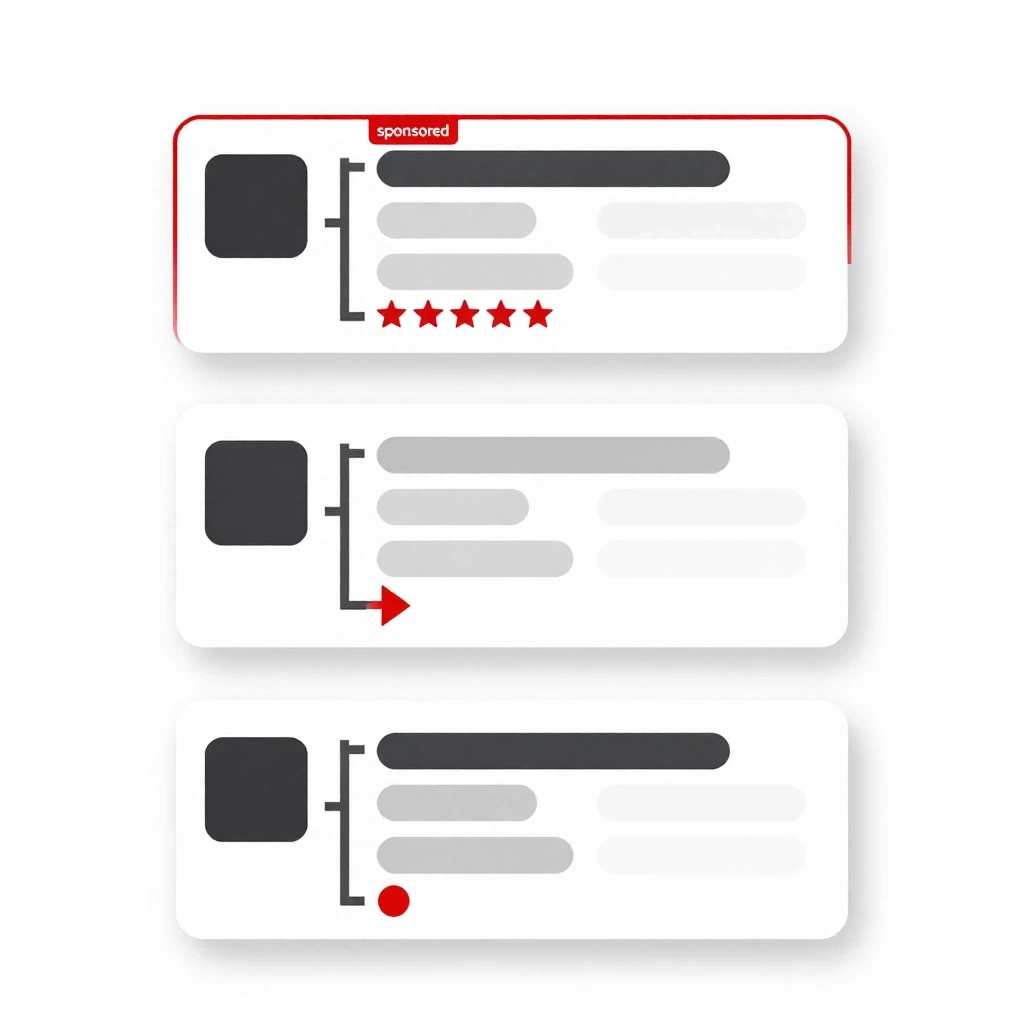
Two clauses in that spec change how you plan a campaign, and neither appears on any vendor page. First, when a bidder serves through the dynamic-creative path rather than embedding assets in the response, the specification recommends supplying three title objects of different lengths and an image at each recommended ratio, because the template decides how much room the headline gets. Write the short version of your hook before the network truncates it for you. Second, when a bid request carries a placement count above one, the spec says you are bidding into a generalised second-price auction for several identical slots at once, which means your effective clearing price on widget inventory is not the number you typed.
Everything else follows. This is why a real time bidding platform can run one campaign across thousands of differently designed sites without a single site-specific creative, why you cannot lock a native layout the way you can lock a 300×250, and why the same headline that wins on a news site dies in an app feed. It also explains why native ad networks were barely disturbed by the identity turmoil of the last five years: their targeting was always weighted toward page context and publisher-side signals, not toward a cross-site identifier.
White label RTB platforms: build, rent or buy a seat
License a white label RTB platform when you are reselling media buying rather than doing it for yourself; rent a seat when you are the end advertiser.
The white-label model swaps a per-campaign fee for a licence. Epom, BidsCube, Teqblaze and AdKernel supply the bidder, the SSP integrations, the reporting and the hosting; you supply the domain, the brand, the client accounts and the margin. Epom advertises connections to between 50 and 80 supply platforms depending on which of its own pages you read vendor claim, and BidsCube claims a branded platform live in about two days vendor claim. Both figures are unaudited and both should be treated as sales copy until a trial proves otherwise.
What the category quietly did in 2026 is consolidate. SmartyAds moved its entire white-label business into a separate brand, Teqblaze, which matters if you were planning to license from the company whose self-serve DSP you already use. Check who actually holds the contract before you sign, because a spin-off changes your support path, your roadmap and sometimes your pricing tier.
The mistake this category invites is buying a platform to solve a staffing problem. A white-label DSP gives an agency ownership of the technology and none of the expertise to run it: the licence is the small number, the media buyer you have to hire is the large one. If nobody on the team can read a bidstream, a rented seat at StackAdapt or SmartyAds will produce better campaigns for less money, and you can revisit ownership when volume justifies it.
In-app native and native search placements
Native in-app advertising is the same asset bundle rendered by an app's SDK instead of a web template, and native search placements are a different thing entirely that most buyers accidentally buy.
In-app native is where most mobile volume actually sits, because app feeds and social feeds are built on the same card pattern. The thing to check before you buy it is reporting granularity: a platform that reports web domains but reports apps as an opaque ID has effectively taken your blacklist away, because you cannot tell which app burned the budget. Ask for app bundle IDs in the source report, and confirm it before funding rather than after.
Native search placements are the more expensive misunderstanding. The Microsoft Audience Network serves native units on MSN, Outlook.com and Edge, and Microsoft search campaigns are extended onto that inventory by default unless you change the ad distribution setting at ad group level. Buyers see native impressions appear in a search campaign and conclude the native units are keyword-triggered. They are not: Audience Network delivery runs on in-market lists, remarketing, customer match and LinkedIn profile data, with no keywords involved.
The reporting consequence is worth stating plainly, because it burns budgets quietly. Native inventory and search inventory produce click-through rates that differ by roughly an order of magnitude — independent 2026 benchmarks put Microsoft search near 4.1% against roughly 0.48% on its native network — so a blended campaign shows a collapsing CTR that has nothing to do with your ads. Split them into separate campaigns with separate KPIs on day one. If a network offers genuine keyword-level native delivery, treat that as a claim to verify in the interface rather than a feature to assume.
Six things to verify before you fund anything
Verify these in order, because each one is cheaper to check than the one after it, and the first three can be settled before you spend anything at all.
- Does the minimum hold across payment methods?Published minimums frequently apply to cards only and rise for wire and crypto. Open the deposit screen with your intended method selected and read the figure there, not the one on the marketing page.
- Can you see bids before you pay?A platform that shows volume and average bids per geo and format after a free registration lets you price a market for nothing. Most do not offer this; it is worth ranking on when one does.
- Is bidding exposed at source level, or only blocking?Native inventory is a long tail of individual placements. A platform that only lets you pause a bad source throws away volume that a bid reduction would have kept. Ask specifically for per-source bid multipliers, not per-source reporting.
- Are the tracker docs public?Postback macros, S2S parameters and API references should be readable before signup. If the integration guide sits behind an account, plan for a support ticket in the middle of your first campaign.
- What is the fee, and is it separate from media?DSPs disclose a percentage. Networks bury the margin in the CPC. Neither is wrong, but you should know which model you are in before you compare two platforms' reported CPCs and conclude anything.
- Is your vertical allowed, in writing?Moderation policy is where affiliate campaigns die at 2am. Check the prohibited-content list against your actual landing page, including the pre-lander, before you build creative for a platform that will reject it.
Then plan the money properly. Reserve enough budget for 50 to 100 conversion events per creative variant, write three headline lengths for every concept, supply both a wide image and a square crop, and switch on source-level reporting before the first impression rather than after the first bad day. The first real optimisation on any native campaign is cutting or repricing the sources that spend without converting, and you cannot do it retroactively if the data was never collected.
What the Privacy Sandbox shutdown actually changed
It changed nothing about how native ads are targeted, and it killed the sales pitch built on cookie deprecation.
Google retired the Privacy Sandbox advertising APIs in October 2025. Topics, Protected Audience and Attribution Reporting were wound down with removal staged across Chrome builds 144 to 150, third-party cookies stayed in Chrome after all, and the UK Competition and Markets Authority released Google from its commitments, as AdExchanger reported at the time. The CMA's own June 2025 findings had recorded publisher revenue falling by roughly 30% when Sandbox tools replaced third-party cookies, which is the practical reason adoption never arrived.
So treat any platform still selling itself as cookieless-ready as a platform reading from a 2023 deck. The durable version of the claim is narrower and still true: native ad networks were always weighted toward contextual and publisher-side signals, so their targeting never depended on the identifier layer the industry spent five years arguing about. DSPs are the ones that had exposure here, and the identity frameworks they built — Unified ID 2.0 chief among them — outlived the deprecation that justified them.
Disclosure rules that land on your creative
Build the disclosure into your own creative rather than relying on the platform's template, because in the US the duty falls on you and in the EU it falls on the platform.
In the United States, the FTC's Native Advertising: A Guide for Businesses and the accompanying Enforcement Policy Statement, both issued on 22 December 2015, apply a net-impression test: if the format leads a reasonable consumer to believe the message is editorial rather than commercial, it is deceptive even when every claim inside it is true. The FTC stated at the time that its policy reaches the parties who help create deceptive content, agencies and affiliate network operators included, not only the advertiser whose product is sold.
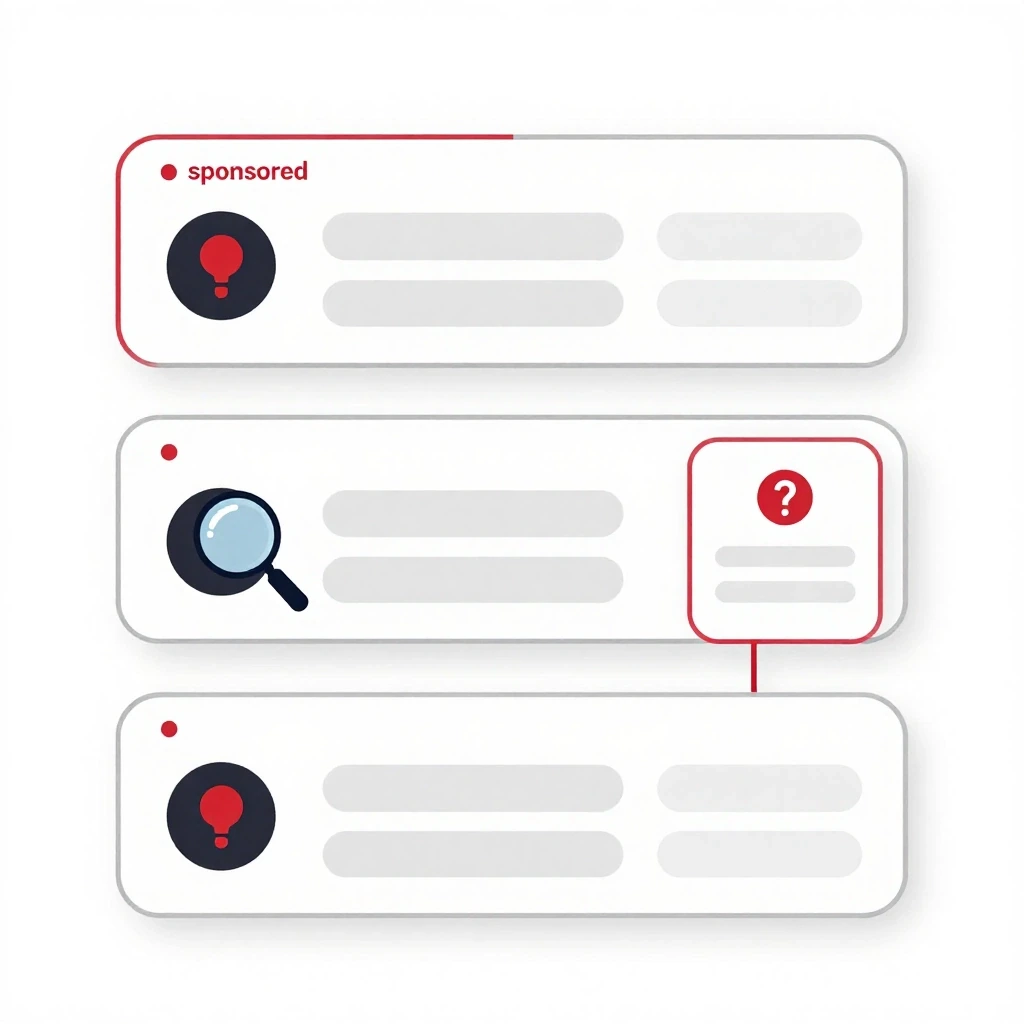
In the European Union, Article 26 of the Digital Services Act puts the labelling obligation on the platform, which must show in real time that an item is an ad, on whose behalf it appears, who paid for it if that differs, and the main parameters that caused it to be shown. That last element, the targeting explanation, has no direct US federal equivalent, so an identical native unit carries a heavier information layer inside the EU than on the open US web. A label your own copy carries survives every rendering environment; one the publisher's template supplies does not.
Questions buyers ask before signing up
What is a native advertising platform?
Software that buys placements rendered by the publisher's own template rather than shipped as a finished banner. It comes in two shapes: a native ad network, which sells inventory it contracted itself and keeps an undisclosed margin, and a demand-side platform, which bids across many exchanges for a disclosed percentage. Both send the same thing into the auction: a headline, an image, a brand name and a call to action as separate assets.
Which is the best native ads platform for affiliate marketing?
For a first test, whichever one lets you fail cheaply and reprice a bad source instead of only blocking it — which in August 2026 means AdsCompass, Revcontent or MGID rather than a DSP. For scale on compliant offers in Tier-1 markets, Taboola has by far the deepest auction and the most competitors to learn from. Most affiliate buyers also run a spy tool such as Anstrex alongside the network, which tells you what is running and never why it converts.
Are there good native ad networks for small publishers?
Fewer than the listicles suggest, because most gate on traffic. Revcontent's publisher side sits near a 50,000 monthly visit threshold, and Taboola and Teads run selective review on top of volume requirements. Smaller sites are usually better served by networks that accept any traffic volume and pay from a low threshold, or by an ad exchange integration through an SSP rather than a direct network deal. Publisher terms move faster than advertiser terms, so re-check any figure older than six months.
Can I use one platform for native and display together?
Yes, and that is the main argument for a DSP over a network. StackAdapt, DV360, Amazon DSP and The Trade Desk all treat native as one format alongside display, video, audio and CTV inside a single bid strategy and one frequency cap. Networks give you native and whatever else they happen to sell — often push, pop and in-page — but with separate optimisation and no shared view of the same user.
How long before a native campaign gives usable data?
Plan on 50 to 100 conversion events per creative variant, not a number of days. At typical native cost per conversion, that is several hundred to a few thousand dollars per concept. Below that you are reading noise, and pausing a campaign on day two because the CTR looks wrong is the most common way buyers throw away an offer that would have worked.
What is an RTB platform, and is it the same as a DSP?
Real-time bidding is the auction protocol; a DSP is the buy-side software that bids into it. In vendor marketing the terms are used interchangeably, and "RTB platform" often refers to a white-label product you rebrand and operate yourself, such as Epom, BidsCube or Teqblaze. Everything real-time on both sides speaks OpenRTB, so the underlying mechanics are identical whichever label the sales page uses.
How this comparison was researched
Every figure traces to a primary document or a dated secondary source, and the two are marked differently on purpose.
Format and bidding mechanics come from the IAB Tech Lab OpenRTB Dynamic Native Ads specification and the OpenRTB 2.x documentation. DSP minimums and fee structures come from Amazon Ads product pages plus agency and vendor reporting published between March and August 2026, with the source named in the text wherever a figure is contested. Spend data is eMarketer's December 2025 US forecast. Regulatory statements come from the FTC's 2015 business guidance and the text of Regulation (EU) 2022/2065. Live creative counts come from OpenAdLibrary's June 2026 index.
Platform minimums are the weakest category of evidence here, because nobody publishes an audited rate card and the aggregator sites recycle each other's numbers. Vendor claims — GEO counts, publisher counts, SSP connections, reach — are marked as claims wherever they appear. The ordering of the tables reflects entry cost combined with how much a buyer can verify before funding an account, which is why a network whose bid calculator is readable without a deposit sits at the top of the first one. The AdsCompass link is a partner link and may earn this site a commission at no cost to you; it carried no weight in that ordering. Treat the review date, 22 August 2026, as the expiry stamp on every number above.